Zero4 program reaches halfway point with 90 partners and growing AI focus

Over the past year, the Zero4 program has expanded both in scope and diversity. Around 120 Konecranes employees are now involved in the program, together with a wide network of partners.
At the halfway point of the program’s five-year journey, the ecosystem has grown to 90 partner organizations and 15 co-funded projects, strengthening cross-industry collaboration. The program is now moving toward real-world applications, with a growing focus on artificial intelligence, digitalized material flows, and energy efficiency.
“Our project portfolio is now well-balanced. It’s rolling evenly across the different key themes of our program,” says Mikael Haag, Konecranes Research Funding Manager.
Growing importance of AI and robotics
One of the most notable developments during the year has been the growing importance of artificial intelligence. While digitalization of material flows, safety, and CO₂ reduction remain core focus areas for the program, AI—especially physical AI—is gaining momentum.
“The interest in AI has grown rapidly, and to maintain our position as a technology leader, we must stay on top of these developments. This is why we have expanded the program’s technological scope to include robotics as well,” Haag explains.
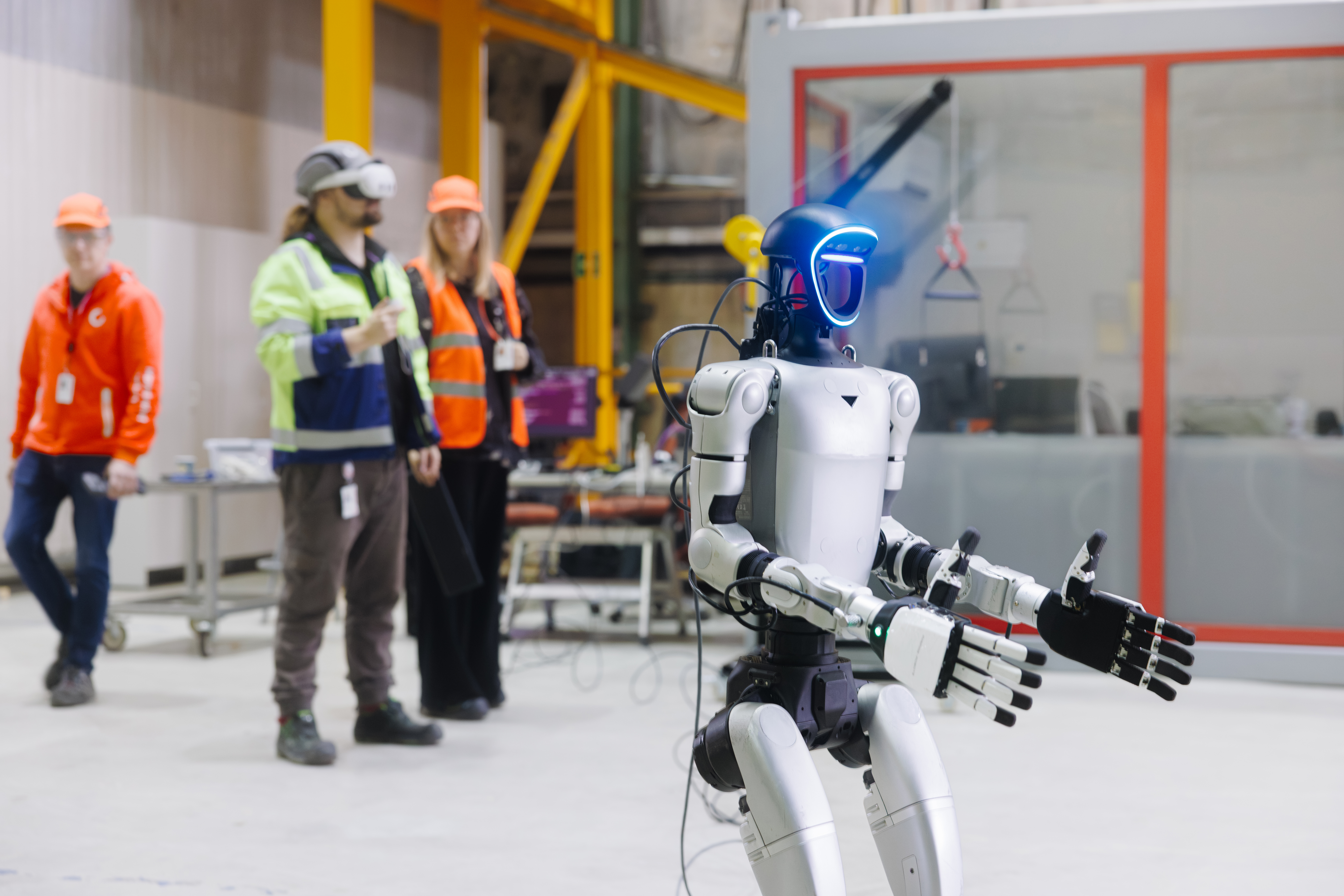
In late 2025, a humanoid robot Hugo was introduced as part of the program’s research activities. It acts as a versatile research platform for technologies such as reinforcement learning and programming, VR, AR, and digital twins.
Although the use of a human-like robot may not seem obvious, the research helps to explore how machines see, understand, and act autonomously. The robot is also being used to build advanced AI-driven capabilities that can later be applied to material handling solutions to improve safety, efficiency, and autonomy.
From research to real-world applications
During the past year, several projects have reached key milestones, with some solutions now being tested in real operating environments.
“We are seeing a clear shift from research to real-world applications. The next phase is about turning these results into scalable solutions,” Haag says.
One example is the HiFive project, which explored future industrial work and human-technology interaction.
“The project developed several new human-machine interface and operation concepts that redefine the user experience of Konecranes solutions. These concepts have generated strong interest in both internal and external technology demonstrations,” Haag continues.
Similarly, the DIM project has demonstrated how cranes and crane data can be connected to MES systems, turning cranes into manufacturing assets and data sources instead of simple lifting devices. In parallel, the MixedFleet and TwinFlow projects have advanced situational awareness, system integration, and safety in intralogistics operations. Together, these initiatives are creating a more integrated and data-driven view of intralogistics.
Advancing energy and material efficiency
As part of the commitment to improving the sustainability of material handling solutions, several co-innovation projects were launched during the year to enhance both energy and material efficiency, thereby reducing the CO₂ emissions of industrial products.
Within the VIIMA project, Konecranes and its partners have conducted research on optimizing powerlines in port cranes, which shows strong potential for improving both material and energy efficiency. In parallel, the DriveForward project has focused on making hydraulic systems more energy efficient, while the new Sustainable Hybrid Structures project explores lightweight structural solutions to reduce material use and improve energy efficiency in lifting equipment.
The DareX project approaches sustainability from a different angle. It aims to develop methods and tools to extend product lifetimes, improve CO₂ handprint, and identify optimal circular strategies for different stages of the product lifecycle.
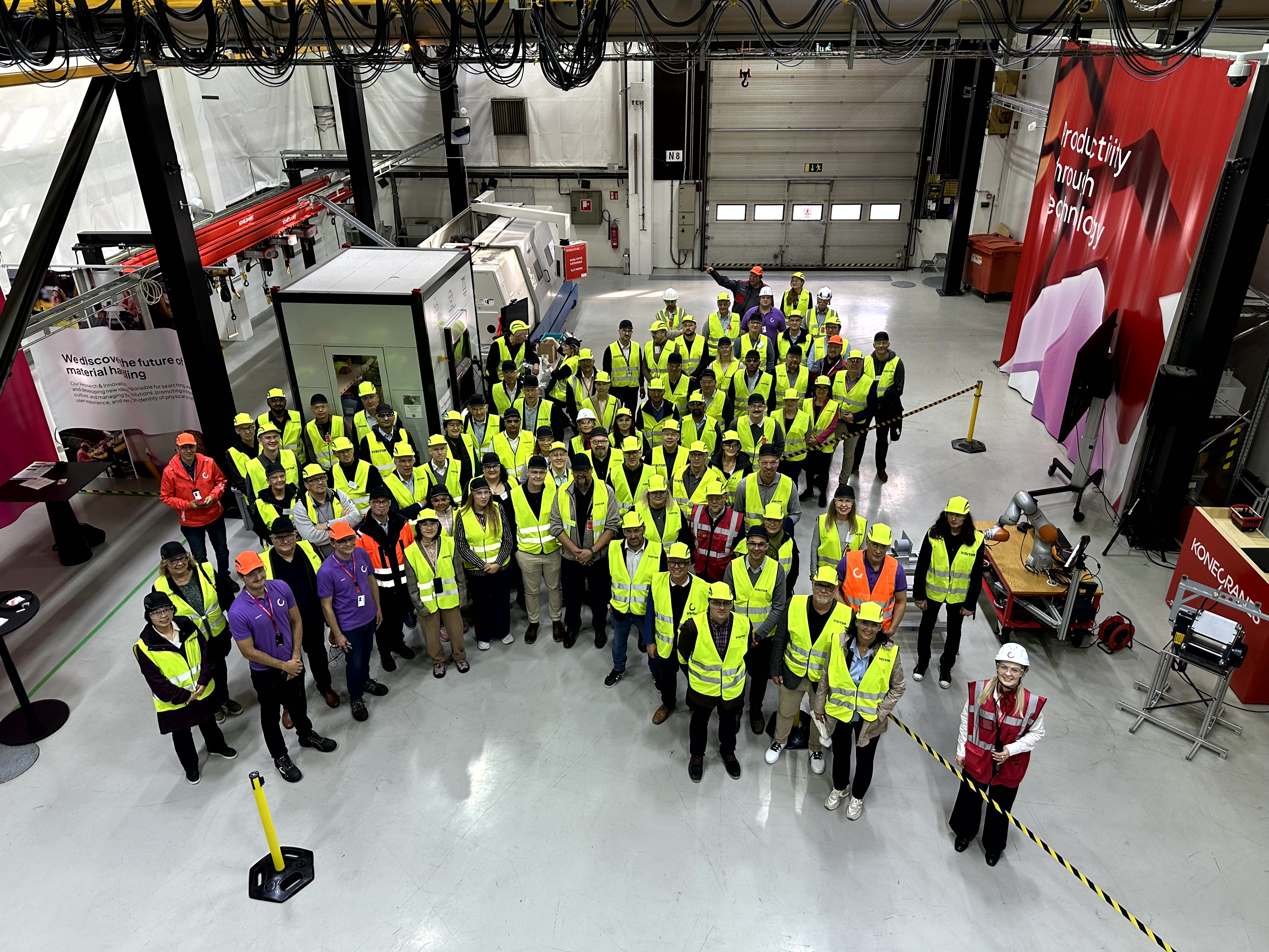
Picture from the annual program event, Zero4 Symposium. The event brought together around 100 participants from companies, universities, and research institutions to explore the future of material handling and share insights from ongoing research projects.
Looking ahead
As the program enters its second half, the focus shifts to scaling results and bringing more solutions into real industrial use. With a balanced portfolio, strong partnerships, and a clear focus on AI, digitalization, and energy efficiency, the program is well positioned to continue its work.
The next phase will focus on closing ongoing projects and launching the remaining ones.
“The first year was about getting things started. The second year showed clear progress, and now we are focused on executing the projects we have planned,” Haag says.
The program has already supported the development of new solutions at Konecranes. It has also represented a significant step change in the scale of innovation within the company.
“This program is on a completely different level compared to anything we’ve ever done before. One of the highlights has been the strengthened internal collaboration across our business units and teams,” Haag explains.
Looking ahead, maintaining and further strengthening collaboration between Konecranes, industry partners, and the academic community remains a key goal.
“Our aim is to ensure that collaboration is mutually beneficial for all parties. We hope our partners have achieved their goals as well,” Haag concludes.
Explore our ongoing co-innovation projects here.